A Creature that Successfully Reshapes Our Understanding of “Living Things”, Forever
- Home
- A Creature that Successfully Reshapes Our Understanding of “Living Things”, Forever
07 November 2025
 Article
Article
A Creature that Successfully Reshapes Our Understanding of “Living Things”, Forever
After centuries of biological development, one major discovery shook biologists. This brings us back to the same question our ancient civilization pondered- What’s life and its form-living things??
“Curiosity led to discovery, and discovery raised more complex questions.”
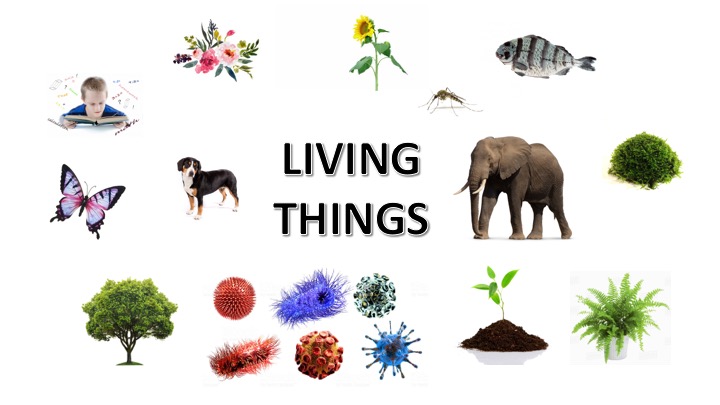
Well, what are the living things actually, though?
Advancements and discoveries throughout history have brought new perspectives to our understanding.
But surprisingly, there is currently no universally accepted definition of “living things”. It seems simple, but it isn’t. Many biologists have proposed their definitions and perspectives, but none of them fully encapsulate all the properties of life.
Greek philosopher, Aristotle claimed that living things are as simple as those possessing “souls”. However, the term “soul” is ambiguous and vague. This results in attempts to redefine it into a more scientific approach.
Biologists have been studying living things for centuries and have arrived at a modern understanding of their characteristics. According to biologyonline.com, living things can reproduce, respirate, obtain and use energy, metabolize, and adapt.

Additionally, all life forms have one thing in common – they are made up of cells. Cells are the smallest building blocks of living things and play a crucial role in sustaining life.
Getting deeper into the fundamentals
One of the biggest discoveries throughout the history of biology is microorganism-living things that can’t be seen by our naked eye, such as bacteria and fungi.
They are simple organisms that can be either unicellular or multicellular but are often unicellular. They are incredibly abundant and essential for our environment. Our intestines alone contain trillions of bacteria, including the E.coli species, which help to maintain the health of our digestive system.
Eubacteria-a scientific name for ancient bacteria in the early days of Earth’s life evolution is the simplest and first-known life form. All of them are unicellular and have very simple properties inside their cells.
This results in an implicit point and raises a rhetorical question.
“So, the point is there’s no living things simpler than forms of cells.”
Logically, yes, it is. Life evolution starts from simple to complex lifeforms, so how does it get any simpler?
Turns out, nature is weirder and more mysterious than we can imagine.
Meta-organism
Meta-organism is an entity with both biotic and abiotic characteristics and properties, yet it can’t be classified as any of them. Its existence removes a definite line of our understanding between what biotic and abiotic is.
There’s only one known creature classified as Meta-organism
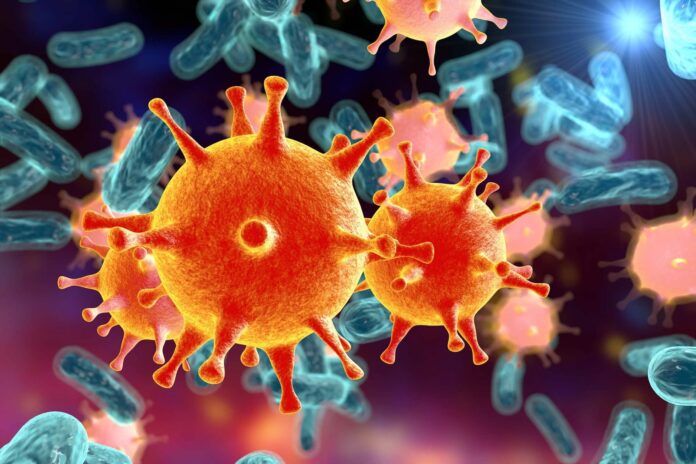
Virus.
The creature behind the deadliest infectious diseases and pandemics throughout human history, just like the newest one we’ve faced – COVID-19 that caused millions of deaths.
It was first discovered by Adolf Meyer at the end of the 19th century when analyzing a sick tobacco plant with yellow dots, which was then known as TMV (tobacco mosaic virus).
Few years later, biologist Dmitri Ivanovsky found that the disease was caused by a very tiny pathogen that produced toxin. In 1897, Martinus Beijenrick then showed that the causal agent of TMV disease couldn’t be killed with antibiotics, meaning that it differs from bacteria-something much tinier and simpler.
Later discoveries of virus crystallization by Wendell Stanley in 1935 left problems to half-answered properties of Virus. In other words, it can’t be said as living things.
The Reason Why
Wendell Stanley discovery wasn’t the sole basis for classifying viruses as a meta-organism. Rather, it is determined from its anatomy.
Firstly, classifying viruses as unicellular is incorrect because their anatomy is much simpler than that of Eukaryotes.
.jpg)